On this page
- Why is it so hard to gain weight in a hostel?
- How much protein and calories does a mess plate actually give?
- What should you add on top of mess food?
- A full hostel day for weight gain (about 2,950 kcal, 103g protein)
- How much will hostel add-ons cost per month?
- How do you store food without a fridge?
- Practical tips that make hostel bulking work
- What about training?
- Hostel diet mistakes to avoid
- FAQs
You can gain muscle on hostel food. You just can't do it on mess food alone. The mess gives you cheap carbohydrates and a little protein at fixed times. Your job is to know what that plate actually delivers, then add a few cheap things on top so the day reaches roughly 2,800 to 3,000 calories and about 100g of protein.
Below: how to estimate your mess plate, what to add with no kitchen, a kettle or a shared kitchen, and a full hostel day that hits both targets for about ₹92 of add-ons. All food numbers come from our Indian food database.
Why is it so hard to gain weight in a hostel?
It is not your metabolism. It is the setup:
- Thin dal. The one protein item on the plate is often more water than lentils.
- Carb-heavy plates. Rice, roti and a potato sabzi fill you up without giving much protein.
- Fixed timings. Breakfast closes at 9, dinner ends at 9:30. Miss one because of a class or a late gym session and you lose a full meal.
- Small budgets. Most of your money already went into the mess fee.
- No kitchen. Many hostels don't allow cooking, and some don't allow kettles.
- Peer schedules. You eat when your friends eat, skip when they skip, and order maggi at midnight when they do.
So you need a plan that works around the mess instead of hoping the mess gets better.
How much protein and calories does a mess plate actually give?
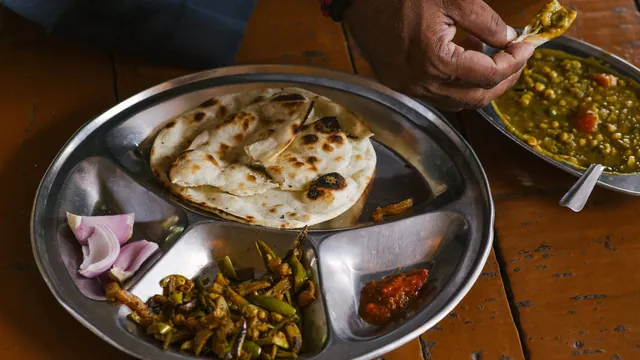
Here is a typical mess lunch or dinner, valued with our database:
- 4 rotis (chapati): 12g protein, 420 calories.
- 1 bowl rice: 4g, 200 calories.
- 1 bowl toor dal: 11g, 200 calories.
- 1 bowl bhindi or similar dry sabzi: 3g, 130 calories.
Plate total: about 30g of protein and 950 calories.
Now the honest adjustment. Database dal is a proper bowl of cooked lentils. If yours is thin enough to see the bottom of the bowl through it, count it as half: about 5.5g and 100 calories. That drops the plate to about 24.5g of protein and 850 calories.
Two such meals give you roughly 50 to 60g of protein and 1,700 to 1,900 calories. Add a poha or paratha breakfast and you are still around 2,100 calories and 55 to 65g of protein. For a 60kg student who lifts, that is roughly 800 calories and 40g of protein short. Our protein guide explains why about 1.6g per kg of bodyweight is the target if you train.
One more thing: rotis are your friend here. If your mess lets you take extra, each one adds 3g of protein and 105 calories you have already paid for.
What should you add on top of mess food?
Sort your options by what your room allows.
No kitchen at all
These need nothing more than a water bottle, a steel glass and a spoon:
- Sattu drink: 1 glass gives 12g protein, 220 calories, for about ₹10. Stir 4 tbsp into water with salt, lemon and roasted jeera.
- Roasted chana: 1 cup (50g) gives 10g, 180 calories, ₹15.
- Boiled eggs: 2 eggs give 12g, 140 calories, ₹13. Many hostel canteens and campus stalls sell them.
- Milk: 1 glass (250ml) gives 6g, 120 calories, ₹12.
- Curd: 1 bowl gives 5g, 100 calories, ₹15.
- Peanut butter: 2 tbsp give 8g and 190 calories for ₹20.
- Banana: about 1g of protein and 105 calories for ₹5.
- Peanut chikki: 1 bar gives 6g, 180 calories, ₹10.
With a kettle (if your hostel allows one)
- Soya chunks: pour just-boiled water over 50g dry chunks, cover for 10 to 15 minutes, drain, squeeze, and add salt, chaat masala and lemon. That is 26g of protein and 170 calories for ₹13, the cheapest protein in our database.
- Oats: 1 bowl gives 6g and 180 calories for ₹15. Make it with hot milk instead of water and add a banana for a 400-plus calorie breakfast.
With a shared kitchen
- Egg bhurji: 2 eggs give 14g, 220 calories, ₹22.
- Paneer bhurji: 100g paneer gives 20g, 300 calories, about ₹60. Good, but pricier per gram of protein than eggs or soya.
A full hostel day for weight gain (about 2,950 kcal, 103g protein)
This is built for a student weighing about 60kg who trains in the evening. Mess items cost you nothing extra. Rupee figures are for the add-ons only, at database prices.
- Mess breakfast (7:30 am): 1 plate poha (5g, 250 kcal) + 2 boiled eggs (12g, 140 kcal, ₹13) + 1 glass milk (6g, 120 kcal, ₹12). 23g, 510 kcal, ₹25.
- Mess lunch (1 pm): 4 rotis, rice, thin dal counted as half, bhindi (24.5g, 850 kcal) + 1 bowl curd (5g, 100 kcal, ₹15). 29.5g, 950 kcal, ₹15.
- Before the gym (5 pm): 1 glass sattu drink (12g, 220 kcal, ₹10) + 1 banana (1.3g, 105 kcal, ₹5). 13.3g, 325 kcal, ₹15.
- After the gym (7 pm): 1 glass milk (6g, 120 kcal, ₹12) + 1 banana (1.3g, 105 kcal, ₹5) + 2 tbsp peanut butter (8g, 190 kcal, ₹20). 15.3g, 415 kcal, ₹37.
- Mess dinner (8:30 pm): 3 rotis, rice, thin dal counted as half, bhindi. 21.5g, 745 kcal, ₹0.
Day total: about 103g of protein (102.6g), about 2,945 calories, ₹92 of add-ons.
If the mess dal is decent, count it in full and you gain another 11g of protein for free.
Vegetarian version: replace the 2 boiled eggs at breakfast with 1 cup of roasted chana (10g, 180 kcal, ₹15). The day becomes about 101g of protein, 2,985 calories and ₹94.
Kettle upgrade: swap the evening sattu for 1 cup of soaked soya chunks. You gain 14g of protein for ₹3 more.
For a home-cooked version with more variety, see our Indian diet plan for muscle gain.
How much will hostel add-ons cost per month?
At database prices, the eggitarian day costs about ₹92 a day in add-ons, or roughly ₹2,760 for 30 days. The vegetarian version comes to about ₹2,820. Prices change by city and season, so treat these as estimates, not a bill.
Tighter month? Drop the peanut butter and the curd, and eat 2 extra mess rotis instead. The day drops to about 96g of protein and 2,865 calories, and your add-ons fall to ₹57 a day, about ₹1,710 a month. For more ways to cut the cost per gram of protein, our high-protein Indian diet on a budget ranks every cheap protein food by grams per ₹10.
How do you store food without a fridge?
Keep this simple and cautious. The WHO's food safety guidance says cooked food should not sit at room temperature for more than 2 hours, and perishable food belongs in a fridge.
- Dry foods (sattu, roasted chana, soya chunks, oats, chikki) keep well in airtight jars. Store peanut butter as the label says.
- Milk, curd and boiled eggs: buy only what you will finish that day. Don't keep an opened milk packet overnight in a warm room.
- Bananas: buy 3 or 4 at a time, not a bunch that ripens all at once.
- If something smells, looks or tastes off, throw it out.
Practical tips that make hostel bulking work
Plan around classes and the gym. If training clashes with dinner, have the sattu before the gym and the milk and peanut butter after, then reach the mess before it closes. Keep chana in your bag for late labs.
Eat with friends, but eat your own plate. Go together, then take the extra roti. If a friend also trains, split a tray of eggs or a jar of peanut butter.
Use Sunday specials. Paneer, chicken or egg curry days are your best protein meals of the week. Take a full portion.
Choose canteen food for protein:
- Omelette (2 eggs): 13g, 190 kcal.
- Anda paratha: 12g, 280 kcal.
- Egg curry (2 eggs): 14g, 250 kcal.
- Paneer tikka: 18g, 280 kcal.
- Chicken curry (1 bowl): 28g, 300 kcal.
Database costs are home-cooked estimates, so expect the canteen to charge more. Samosas, maggi and vada pav (6g of protein for 300 calories) are fine occasionally, but they are mostly refined carbs and fat.
What about training?
Extra food only turns into muscle if you train for it. Lift 3 or 4 days a week on compound movements and add a little weight or a rep each week. If you are new, start with our guide on how to start the gym as a beginner. For the full hardgainer approach, including a 3-day routine, read how to build muscle as a skinny guy. No gym nearby? Our templates include a student hostel room workout.
Hostel diet mistakes to avoid
- Junk-food bulking. Chips, cold drinks and midnight maggi add calories with almost no protein. You gain fat, not muscle.
- Skipping breakfast. In the sample day it is 510 calories and 23g of protein, and a mess lunch can't make that back.
- Relying on gainer powders. A homemade milk, banana and peanut butter combination gives you similar calories and protein, and you know exactly what is in it. ICMR-NIN's 2024 guidelines note that most people can meet protein needs from food alone. If you want to skip powders entirely, here are Indian foods that replace whey.
- Not tracking your weight. Weigh yourself 3 or 4 mornings a week, after the toilet and before breakfast, and compare weekly averages. Aim for a gain of 0.25 to 0.5% of bodyweight a week, about 150 to 300g at 60kg. Flat for 2 weeks? Add a glass of milk and a banana. Gaining much faster? Pull back a little.
Start with one add-on this week and another next week. For the cheapest protein across the whole database, see our budget high-protein diet guide. And if you want a coach to build this around your own mess menu, timetable and budget, with daily check-ins on WhatsApp, that is what our coaching does.
Frequently asked questions
How can I gain weight in a hostel?
Eat every mess meal, including breakfast, then add 600 to 900 calories of cheap extras like milk, bananas, peanut butter, sattu and roasted chana. The sample day in this guide reaches about 2,950 calories and 103g of protein with ₹92 of add-ons. Track your weekly average weight and add more food if it stays flat for 2 weeks.
What should I eat in a hostel for muscle gain?
Eat your mess meals for carbohydrates and add protein you can keep in a room: sattu, roasted chana, boiled eggs, milk and curd. With a kettle, soya chunks give 26g of protein for about ₹13. Aim for roughly 1.6g of protein per kg of bodyweight a day, spread over 4 or 5 meals.
Is mess food enough for the gym?
Usually not on its own. A typical mess lunch or dinner gives about 25 to 30g of protein and 850 to 950 calories, so two meals and breakfast leave most lifters about 40g of protein and several hundred calories short. Mess food works well as the base of the day, not the whole day.
How much should a hostel student spend on protein?
At our database prices, the add-ons in this guide cost about ₹2,700 to ₹2,900 a month for a day of about 100g of protein. A tighter version with extra mess rotis costs about ₹1,700 a month and still reaches about 96g. Prices vary by city, so treat these as estimates.
Do I need a mass gainer in a hostel?
No. A glass of milk, a banana and 2 tbsp of peanut butter give about 15g of protein and 415 calories for around ₹37, and most of it needs no kitchen. Fix your daily food first, then decide if you still need anything else.