On this page
- What actually causes fat loss?
- How many calories should you eat to lose fat?
- How much protein do you need while losing fat?
- How should an Indian fat loss plate look?
- Sample day 1: vegetarian, about 1,500 calories
- Sample day 2: non-veg, about 1,500 calories
- Sample day 3: vegetarian, about 1,800 calories
- Sample day 4: non-veg, about 1,800 calories
- Which food swaps save the most calories?
- What are the most common fat loss mistakes?
- What if your weight stops dropping?
- How do strength training and walking fit in?
- Putting it together
- FAQs
You do not need to quit roti, rice or ghar ka khana to lose fat. You need to eat a little less than your body burns, keep your protein high, lift weights, and do that for months, not days. Everything else (keto, intermittent fasting, detox water, "no carbs after 7") is a way of creating that same deficit, sometimes well, often badly.
This guide shows you how to set up a calorie deficit on everyday Indian food. You get four full sample days (1,500 and 1,800 calories, veg and non-veg) with protein and cost worked out from our Indian food database, the swaps that save the most calories, and the mistakes that stall most people by week three.
What actually causes fat loss?
A calorie deficit, held consistently. When you eat less energy than you use, your body makes up the gap from stored fat (and, if you are careless, from muscle).
The diet style matters far less than people think. In the POUNDS Lost trial, 811 overweight adults were put on four reduced-calorie diets with very different amounts of fat, protein and carbohydrate. After two years, weight loss was similar across all four. The researchers concluded that reduced-calorie diets work regardless of which macronutrients they emphasise. What did predict success was showing up: attendance at the programme's group sessions was strongly linked to weight loss.
That is good news for Indian food. You do not need to swap roti for imported "diet" foods. You need the right portions of what you already eat.
Two things decide whether the weight you lose is fat or muscle:
- Protein. A review in the American Journal of Clinical Nutrition found that higher-protein, calorie-restricted diets led to more fat loss and better preservation of lean mass than lower-protein ones, and gave a modest boost to fullness.
- Strength training. A review on preserving muscle during weight loss concluded that both endurance and resistance exercise help keep muscle mass while you diet, and that resistance training also improves strength.
So the formula is: moderate deficit, high protein, lift weights. The rest of this guide is about making that work with dal, sabzi, eggs and chicken.
How many calories should you eat to lose fat?
Start by estimating your maintenance calories, the amount that keeps your weight steady. Our TDEE calculator does this from your age, height, weight and activity level.
Then eat roughly 300 to 500 calories below that number. The sample days below use 1,500 and 1,800 calories as two common starting points. Pick whichever is closer to your own number and adjust portions of roti or rice to fit.
How fast should the scale move? ICMR-NIN's 2024 Dietary Guidelines for Indians say weight reduction should be gradual, that losing half a kilogram a week is considered safe, and that rapid weight loss approaches should be avoided. A review on contest prep for natural bodybuilders, a group very focused on keeping muscle, recommends losing about 0.5 to 1% of body weight per week. For a 70kg person that is 350 to 700g a week.
A few practical rules from our coaching:
- Judge the trend, not the day. Weigh yourself a few mornings a week, after the toilet, and compare weekly averages. Water and salt can swing your weight by a kilo overnight.
- Do not go too low. ICMR-NIN says weight reduction diets should not go below 1,000 calories a day, and that the deficit should not go beyond 40% of your daily needs if you want to protect muscle. We do not recommend going below roughly 1,200 calories without a doctor or dietitian involved.
- Check with your doctor first if you have diabetes, a thyroid condition, PCOS, kidney disease, are pregnant or breastfeeding, or take regular medication. A calorie deficit can change how some medicines work and what your body needs.
How much protein do you need while losing fat?
More than most Indian diets give you. The International Society of Sports Nutrition's position stand puts 1.4 to 2.0g per kg of bodyweight per day as sufficient for most people who exercise, and notes that resistance-trained people in a calorie deficit may need more. The protein review mentioned above found benefits for appetite and weight management at about 1.2 to 1.6g/kg, with at least 25 to 30g per meal.
In practice, about 1.6g/kg is a solid target. If you are carrying a lot of extra weight, base it on your goal weight rather than your current one. That is why the 1,500 calorie days below aim for at least 90g and the 1,800 calorie days aim for 110g.
For the full breakdown by bodyweight, read how much protein you need per day. If budget is the problem, our high-protein Indian diet on a budget ranks the cheapest sources per rupee.
How should an Indian fat loss plate look?
ICMR-NIN's "My Plate for the Day" has vegetables, fruits, green leafy vegetables, roots and tubers making up roughly half of the recommended food for the day. We turn that into a simple plate rule for each main meal:
- Half the plate: sabzi or salad. Bhindi, lauki, palak, beans, cabbage, cucumber, tomato. They fill the plate for few calories.
- A quarter: protein. Dal, soya chunks, paneer, eggs, chicken or fish. Make this a real portion, not a garnish.
- A quarter: roti or rice. Two rotis or one bowl of rice is a sensible starting point at these calorie levels. Not sure which to pick? Read roti or rice for weight loss.
That is our coaching version, not an official ICMR diagram, but it follows the same idea: vegetables first, protein in every meal, carbs in proportion. You never have to give up roti. You just stop letting it take over the plate.
Sample day 1: vegetarian, about 1,500 calories
- Breakfast: 1 pesarattu (moong dosa) + 1 glass milk. 300 cal, 18g protein, ₹42.
- Lunch: 1 bowl masoor dal + 2 rotis + 1 bowl bhindi masala. 530 cal, 23g, ₹60.
- Evening: 1 cup roasted chana + 1 glass chaas. 240 cal, 13g, ₹25.
- Dinner: 1 bowl soya chunk curry + 1 roti + 1 bowl curd. 425 cal, 36g, ₹45.
Total: 1,495 calories, 90g protein, about ₹172.
Soya chunk curry carries this day. One bowl gives 28g of protein for 220 calories, which is hard to beat on a vegetarian plate. If soya is new to you, our soya chunks guide covers how to cook it and how much is sensible.
Sample day 2: non-veg, about 1,500 calories
- Breakfast: 1 bowl oats + 2 boiled eggs. 320 cal, 18g protein, ₹28.
- Lunch: 100g grilled chicken breast + 1 bowl rice + 1 bowl bhindi masala. 495 cal, 38g, ₹105.
- Evening: 1 cup roasted chana. 180 cal, 10g, ₹15.
- Dinner: 1 bowl masoor dal + 2 rotis + 1 bowl curd. 500 cal, 25g, ₹50.
Total: 1,495 calories, 91g protein, about ₹198.
Chicken breast is one of the leanest proteins in our database (31g for 165 calories), but it is also the priciest part of this day. Eggs and dal keep the cost sensible. Our eggs vs paneer vs chicken comparison shows how the three stack up per rupee and per calorie.
Sample day 3: vegetarian, about 1,800 calories
- Breakfast: 1 pesarattu + 1 bowl curd. 280 cal, 17g protein, ₹45.
- Lunch: 1 bowl masoor dal + 2 rotis + 1 bowl bhindi masala + 100g paneer, cubed into a salad with onion, tomato and chaat masala. 790 cal, 41g, ₹110.
- Evening: 1 glass sattu drink. 220 cal, 12g, ₹10.
- Dinner: 1 bowl soya chunk curry + 2 rotis. 430 cal, 34g, ₹35.
- Before bed: 1 glass milk. 120 cal, 6g, ₹12.
Total: 1,840 calories, 110g protein, about ₹212.
Paneer is welcome on a fat loss diet, but in measured amounts: 100g carries 260 calories and 20g of fat. Weigh it once so you know what 100g looks like. More on that in is paneer good for weight loss.
Sample day 4: non-veg, about 1,800 calories
- Breakfast: 4 boiled eggs + 1 banana. 385 cal, 25g protein, ₹31.
- Lunch: 100g grilled chicken breast + 1 bowl rice + 1 bowl masoor dal + 1 bowl bhindi masala. 685 cal, 52g, ₹130.
- Evening: 1 cup roasted chana. 180 cal, 10g, ₹15.
- Dinner: 1 bowl egg curry (2 eggs) + 2 rotis + 1 bowl curd. 560 cal, 25g, ₹57.
Total: 1,810 calories, about 112g protein, about ₹233.
Breakfast here does a lot of work: 25g of protein before 9 am makes the rest of the day easy. For more morning options, see our high-protein Indian breakfasts.
Notes on all four days
- Oil is the wildcard. Measure it. ICMR-NIN counts a teaspoon as 5g, and fat carries 9 calories per gram, so every extra teaspoon you pour in adds about 45 calories. Three careless teaspoons a day is a small plate of food you never counted.
- Restaurant versions are heavier. The numbers come from our database serving sizes. A dhaba bowl of the same curry can carry a lot more oil and cream.
- Prices are estimates and vary by city and season. Treat them as a guide, not a bill.
- Swap freely within the same type of food. Moong dal for masoor, fish curry for chicken, tofu bhurji for paneer. Check any food's numbers on our Indian food calorie chart.
Which food swaps save the most calories?
You do not need to give up your favourite meals. You need to trade the heaviest versions for lighter ones most of the time. Here are the biggest swaps in our database, per serving:
- Butter chicken (420 cal) to chicken tikka (200 cal): saves 220 calories, and you gain 2g of protein (26g to 28g). Tandoori chicken (260 cal) saves 160.
- Kadai paneer (320 cal) to tofu bhurji (180 cal): saves 140 calories at the same 16g of protein.
- Sweet lassi (200 cal) to chaas (60 cal): saves 140 calories. One a day for a week is 980 calories.
- Dal makhani (320 cal) to masoor dal (190 cal): saves 130 calories and adds 2g of protein (12g to 14g).
- 2 plain parathas (360 cal) to 2 rotis (210 cal): saves 150 calories, 75 per piece.
- Vada pav (300 cal) to roasted makhana (100 cal): saves 200 calories. Roasted chana (180 cal) saves 120 and brings 10g of protein.
- Masala dosa (280 cal) to pesarattu (180 cal): saves 100 calories and doubles the protein (6g to 12g).
- 2 gulab jamuns (300 cal) to 2 rasgullas (200 cal): saves 100 calories when you do want something sweet.
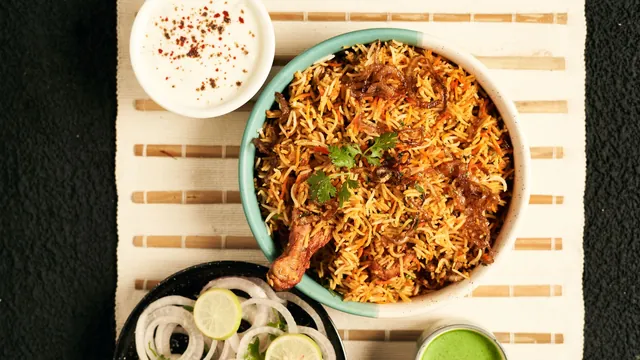
- Chicken biryani (450 cal) to 100g chicken breast + 1 bowl rice (365 cal): saves 85 calories and lifts protein from 22g to 35g.
Make two or three of these swaps a day and you have most of a 300 to 500 calorie deficit without changing what kind of food you eat. ICMR-NIN's guidelines make the same point: cut calories from refined carbs, sugary drinks and cooking oil, and swap deep-fried snacks for lighter options like salads and sprouts. Biryani lovers, read whether biryani fits a gym diet before you give it up.
What are the most common fat loss mistakes?
- Drinking your calories. Sweet lassi, sugary chai three times a day, juice, cold drinks and alcohol add up fast and do not fill you up. ICMR-NIN advises cutting sugary drinks and choosing water, buttermilk or unsweetened options.
- Not counting oil. This is the single biggest reason "I eat clean but don't lose weight" happens in Indian kitchens. Measure with a teaspoon for two weeks and you will see it.
- Perfect weekdays, free weekends. Five days at a 400 calorie deficit is 2,000 calories. One wedding buffet or a heavy Saturday can wipe most of that out. Enjoy the weekend, just keep it inside the same rough plan.
- Crash dieting. Eating 800 calories, skipping dinners, or doing a viral 30-day challenge feels productive for a week and then collapses. ICMR-NIN warns that extreme weight loss approaches can harm health. We wrote about why in our 75 Hard review.
- Skipping protein. A plate of poha gives about 5g of protein. Low-protein deficits make you hungrier and cost you muscle. Put a real protein in every meal.
- Changing the plan every week. Give a calorie target at least two to three weeks before judging it. See more traps in our list of beginner gym mistakes.
What if your weight stops dropping?
Plateaus are normal. Before you cut food further, check three things honestly for one week:
- Are you actually at your target? Track everything, including oil, chai sugar and weekend meals. Most plateaus are untracked calories.
- Is it a real plateau? Compare two to three weeks of average weight and your waist measurement, not two single weigh-ins.
- Has your movement dropped? Many people move less without noticing once they start dieting.
If all three check out and nothing has changed for three weeks, reduce by about 100 to 150 calories (one roti, or one teaspoon of oil less at each meal) or add a daily walk. Small adjustments, not crash cuts.
How do strength training and walking fit in?
Food creates the deficit. Training decides what you lose.
Lift weights two to four times a week. ICMR-NIN's guidelines say regular strength training with weights is necessary to maintain muscle mass. Use a simple full-body plan and add a little weight or a few reps over time, which is the idea behind progressive overload. Do not switch to light weights and high reps because you are "cutting". Heavy-enough training is the signal that tells your body to keep its muscle.
Walk every day. Walking adds to your calorie burn without making you ravenous the way hard cardio sometimes does. ICMR-NIN suggests adults get around 20 to 40 minutes of moderate-intensity activity a day, plus breaking up long sitting with short walks. If you want to add structured cardio, easy zone 2 cardio is a good fit alongside lifting.
Sleep matters too. ICMR-NIN links inadequate sleep with weight gain. Our guide on losing belly fat covers sleep, steps and why spot reduction does not work.
Putting it together
Pick the sample day closest to your calorie target and diet. Eat it, or something very close to it, for two weeks. Weigh yourself a few mornings a week, measure your waist once a week, lift weights, walk daily, and measure your oil. Then adjust by small amounts based on the trend.
That is genuinely all a fat loss diet is. The hard part is not knowing what to do, it is doing it on the days you are tired, at the wedding, and in the hostel mess. If you want a coach to set your calories, build the plan around your own food and routine, and keep you on track over WhatsApp, that is exactly what our coaching plans are for.
Frequently asked questions
What is the best Indian diet plan for fat loss?
Any plan that keeps you in a moderate calorie deficit with enough protein, and that you can follow for months. In practice that means dal, sabzi, roti or rice in sensible portions, plus a real protein source like soya chunks, paneer, eggs, chicken or fish at each meal. The four sample days above show what that looks like at 1,500 and 1,800 calories.
How many calories should I eat in a day to lose weight in India?
Estimate your maintenance calories with our TDEE calculator, then eat roughly 300 to 500 below it. Do not go below roughly 1,200 without medical guidance; ICMR-NIN says weight reduction diets should not fall below 1,000 calories a day.
Can I eat roti and rice while losing fat?
Yes. Fat loss depends on total calories, not on cutting out a food group. A large two-year trial found similar weight loss on high-carb and low-carb diets when calories were reduced. Keep roti or rice to about a quarter of your plate, around two rotis or one bowl of rice per meal at these calorie levels.
How fast can I lose fat safely?
ICMR-NIN considers losing about half a kilogram a week safe and advises against rapid weight loss. A review on natural bodybuilding contest prep suggests 0.5 to 1% of body weight per week to protect muscle. Faster than that usually costs muscle and is hard to sustain.
Is a vegetarian diet good for fat loss?
Yes, as long as you plan protein. Soya chunks, paneer, curd, dal, roasted chana, sattu and pesarattu can get a vegetarian to 90 to 110g of protein a day, as the veg sample days above show. The main trap is a diet that is mostly roti, rice and potato sabzi with a thin dal, which is low in protein and easy to overeat.